
Hello ! Click on one of our team members below to chat on WhatsApp.
Dental Retainer Wire Placement: Procedure and Advice
The retainer wire is the ultimate safeguard for your orthodontic treatment. Once your teeth are aligned, it preserves this result day after day, discreetly and reliably. However, the placement of a retainer wire, this thin metal — or advanced polymer — wire, often raises questions: Is it painful? How long does it take? How will you get used to it? This article explains step-by-step the placement procedure, the sensations to expect, and the precautions to follow in the hours and days that follow.
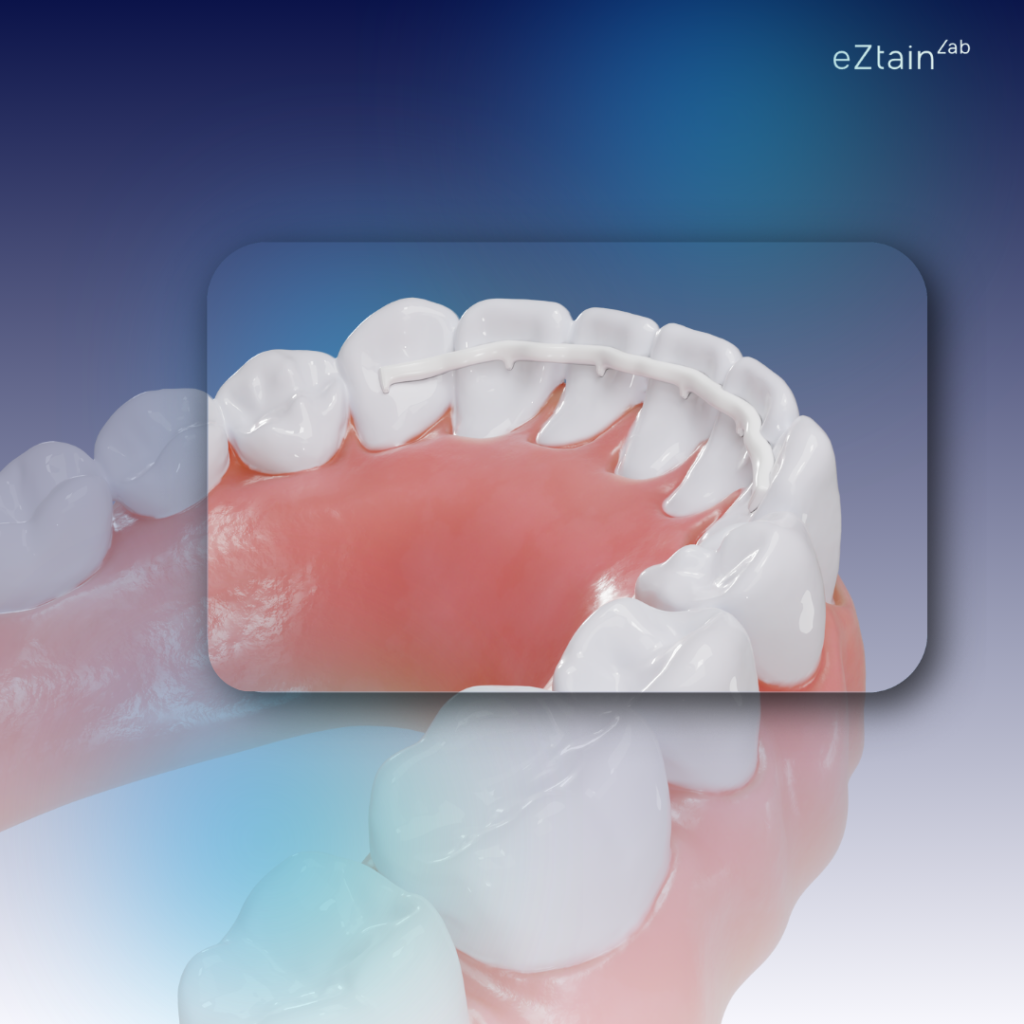
New generation PEEK retainer wire – modeled
What is a retainer wire?
The retainer wire is a thin device, usually made of a flexible metal alloy or a high-performance PEEK polymer, bonded to the inner surface of the anterior teeth. Its role is to maintain the teeth in the position achieved after orthodontic treatment and to prevent any undesirable movement. Unlike removable retainers, it works 24/7 without any particular effort on your part.
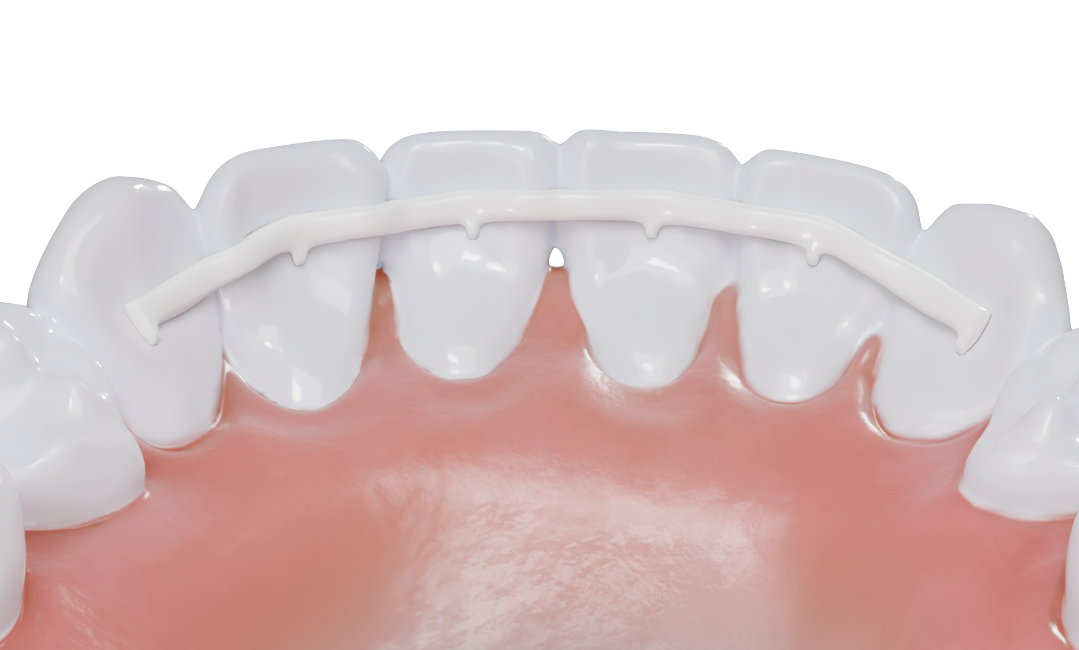
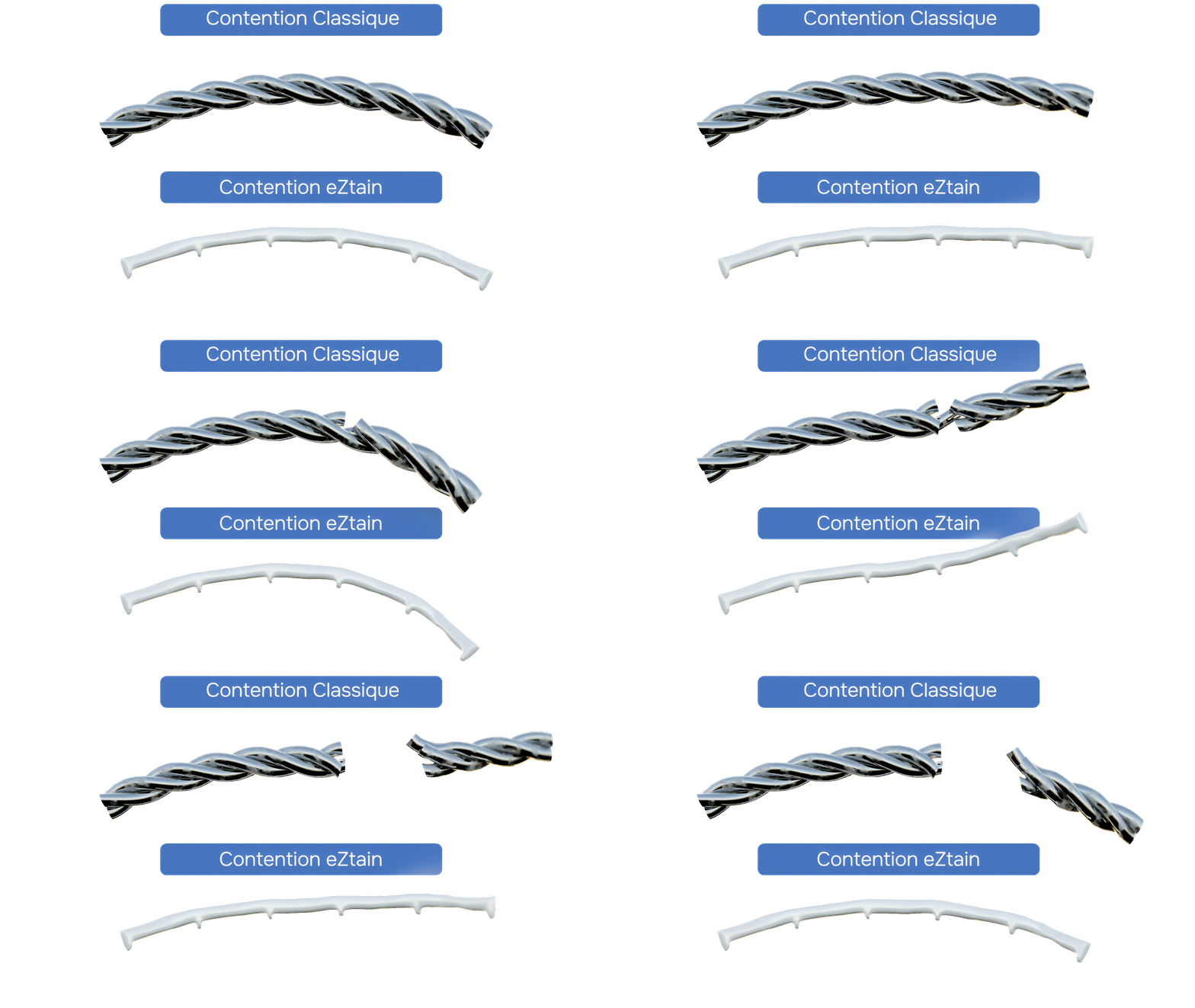
Its longevity depends on the bonding technique, the material chosen by your orthodontist, and your daily oral hygiene: to find out how long to keep a retainer wire, consult our dedicated article.
When is a retainer wire placed?
Retainer wire placement occurs immediately at the end of the active phase of orthodontic treatment, i.e., when the desired alignment is achieved and fixed appliances (braces or aligners) are removed. It can be performed during the same appointment as the appliance removal or in the very first days that follow, after checking gingival health. This early intervention allows for “locking in” the new tooth position, a period when the periodontal fibers — still elastic — tend to return to their initial position. The retainer wire thus acts as a permanent safeguard during the months, or even years, necessary for the definitive stabilization of the occlusion.
Steps for Retainer Wire Placement
Before starting, rest assured: the procedure is quick (less than ten minutes), completely painless, and is one of the most common orthodontic procedures, perfectly mastered for several decades.
Tooth Preparation
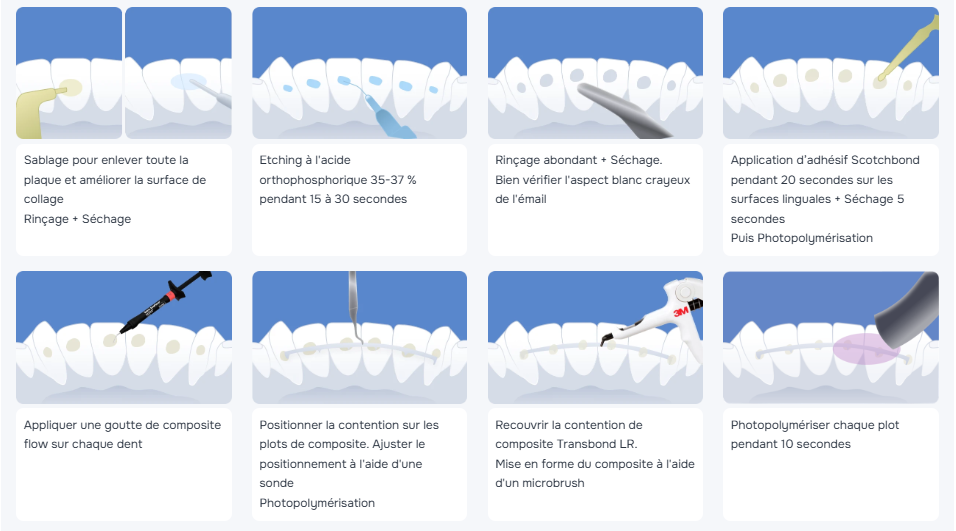
First and foremost, the practitioner performs a thorough preliminary cleaning of the tooth surface: plaque removal, complete drying, and isolation of the area. They then apply an etching gel. Applied for 15 seconds, this gel aims to very slightly dissolve the superficial enamel layer; this controlled micro-etching makes the surface subtly rough, which then optimizes the adhesion of the composite resin.
Dental Bonding and Wire Fixation
The wire pre-formed by your practitioner by hand, or made in the laboratory for greater precision prior to your appointment, is positioned on the lingual surface of the teeth. A thin layer of composite resin is applied over it, then polymerized using a UV lamp. You may feel a slight discomfort on your tongue for the first few days, but there is no pain. The procedure usually takes a few minutes, including fixation.
Immediate Adjustment and Verification
Once the composite polymerization is complete, the practitioner proceeds with the adjustment: they ensure that the wire does not interfere with your occlusion (ability to bite) nor with your phonation (ability to speak without discomfort), and that no excess composite resin irritates your tongue. The fixation is immediate; you can leave with peace of mind after a final mirror check.
[In image] Placement of a new generation eZtain retainer wire
Does retainer wire placement hurt?
No, retainer wire placement does not hurt. The gel used acts only on the enamel surface, without reaching the deeper sensitive parts of the tooth, and the resin is cold-solidified in a few seconds.
Only a temporary sensitivity or slight tongue discomfort may appear in the first few hours.
How to get used to the retainer wire?
In the days that follow, your tongue will naturally explore this new element. This discomfort is completely normal and usually disappears within 48 to 72 hours. However, a few simple actions can significantly reduce the adaptation time:
- Opt for soft foods during the first 24 hours;
- Stay hydrated regularly;
- Avoid intentionally pulling or pushing against the wire with your tongue.
Will you feel the retainer wire?
Yes, after your retainer wire is placed, you will feel it with the tip of your tongue. However, the wire is so thin (0.4 to 0.7 mm) that you will no longer perceive it after a few days.
Its inner surface and the absence of sharp edges limit any chronic irritation. If discomfort persists after one week, consult your orthodontist.
Although a retainer wire is not felt much, it remains a foreign object in your body.
That is why at eZtain Lab, we have designed a retainer wire robot-milled for maximum precision.
Each wire is custom-made, micro-adapted to the patient’s dental morphology, and further reduces the sensation of the retainer’s presence on your gums.
All edges are smoothed and the surface is polished to ensure comfort far superior to that of a manually bent steel wire.
Daily Life After Retainer Wire Placement
Eating: What precautions?
There are no specific precautions to take after retainer wire placement; however, if slight discomfort appears, you can:
- For 24 hours, limit hard foods (bread crusts, nuts) and sticky foods (caramel, chewing gum).
- Favor your molars over your incisors when chewing
Risks of Plaque Accumulation: Why Stay Vigilant?
A fixed wire creates retention areas where dental plaque and bacterial biofilm can accumulate. Over time, this accumulation promotes enamel demineralization, the appearance of cavities, and gum inflammation, which can progress to periodontitis. These complications compromise not only your oral health, but also the stability of the orthodontic treatment achieved.
To neutralize this risk, we created eZtain®, a retainer wire made of PEEK (polyether ether ketone). Its ultra-smooth surface reduces bacterial adhesion by more than 60% compared to a classic metal wire*, thus limiting plaque formation and simplifying daily maintenance. You therefore benefit from lasting protection for your teeth and gums, without changing your hygiene habits.
Milled at the micron scale, eZtain retainer wires are perfectly adapted to dental morphology and prevent the creation of accumulation zones for bacteria. In the long term, the effect of these bacteria can be very detrimental to your oral environment. Preventing their implantation means preserving the health of your teeth and gums long-term.
*Source: eZtain internal data, in vitro tests 2024.
Custom Adaptation and Comfort
Most traditional metal wires are bent by hand. Even for the most experienced practitioner, this adjustment step takes several minutes and can leave small irregularities that may irritate the tongue or retain more plaque.
To counter this, eZtain® polymer wires are digitally custom-milled to the micron in a specialized laboratory: the entire bending and adjustment phase is outsourced, which guarantees perfect positioning upon placement. You thus benefit from immediate comfort, with no adjustments needed.
Enhanced Oral Hygiene
- Brush your teeth after every meal with a soft brush.
- Use interdental brushes under the wire to remove plaque.
- Optional: Finish with a non-staining fluoride mouthwash.
- Schedule a professional scaling every six to 12 months.
Immediate Post-Placement Advice
- Sensitivity: Slight discomfort or tongue sensitivity is common; it usually disappears within 24 to 48 hours. If needed, a mild analgesic (such as paracetamol) is sufficient.
- Fixation Check: Examine the wire in the mirror after the first brushing. If you notice a loose segment or a detached point, contact your orthodontist within 48 hours for re-bonding.
- Tongue or Cheek Irritation: Apply a little orthodontic wax to the rough area; if irritation persists, a quick polish will remove the excess composite.
- Symptom Monitoring: Gum swelling, persistent pain, or bad breath should prompt you to consult a professional; they may indicate plaque accumulation around the wire.
FAQ
1. Can a retainer wire be removed?
Yes, it is possible to remove a retainer wire, but only by a professional after their confirmation that it will no longer impact your teeth.
2. What to do if a retainer wire detaches?
Do not pull on it; contact your orthodontist as soon as possible to have it re-bonded. A partially detached wire loses its effectiveness and can promote plaque accumulation.
3. Is professional cleaning necessary?
Absolutely. A professional scaling every six months removes plaque around the wire and prevents cavities and gum inflammation if your retainer wire is not made of polymer.
4. Is the wire compatible with teeth whitening?
Yes, you can whiten your teeth, but the composite resin will not change color; your practitioner can replace it after treatment if necessary.
Ready to learn everything you need to know before getting your retainer wire placed?
Discover our complete guide to retainer wires and benefit from expert advice for a lasting and comfortable smile.
About the Author
Dr. Nicolas Philippides is an orthodontist, graduated from the University of Strasbourg, and holds a postgraduate degree (CES) in dentofacial orthopedics. With several years of clinical practice, he has treated hundreds of patients, maintaining a constant focus on long-term stability and comfort.
Confronted with the limitations of conventional retainers, he founded eZtain Lab in 2022—a project born from a simple yet recurring clinical observation: too many relapses caused by poorly adapted or fragile retainer wires. In collaboration with INSA, he developed a new generation of custom-made PEEK retainer wires, designed to be comfortable, durable, and precisely adapted to each patient.
Today, his research and clinical experience are driven by a single ambition: to offer reliable devices, built to last, and fully aligned with the demands of modern orthodontics.