
Hello ! Click on one of our team members below to chat on WhatsApp.
Debonded or Broken Retainer Wire: What to Do
(Emergency Guide, Causes, and Prevention)
Debonded Retainer Wire? Here’s What to Do Immediately
Is your dental retainer wire debonded? Don’t panic! Never attempt to re-bond it: over-the-counter adhesives damage enamel and compromise alignment. Cover the loose end with a bit of orthodontic wax, eat soft foods, and wear your nighttime retainer if you have one. Contact your orthodontist promptly: ideally within 48 hours to prevent teeth from shifting. A debonded retainer wire is recognized by certain typical signs: a feeling of discomfort or movement behind the teeth, a wire that pokes or injures the tongue, or a small gap reappearing between two teeth.
To prevent your retainer wire from repeatedly debonding or breaking, opt for the durable eZtain solution: its PEEK polymer, developed with INSA, is at least three times stronger than steel, discreet, comfortable… and virtually unbreakable.
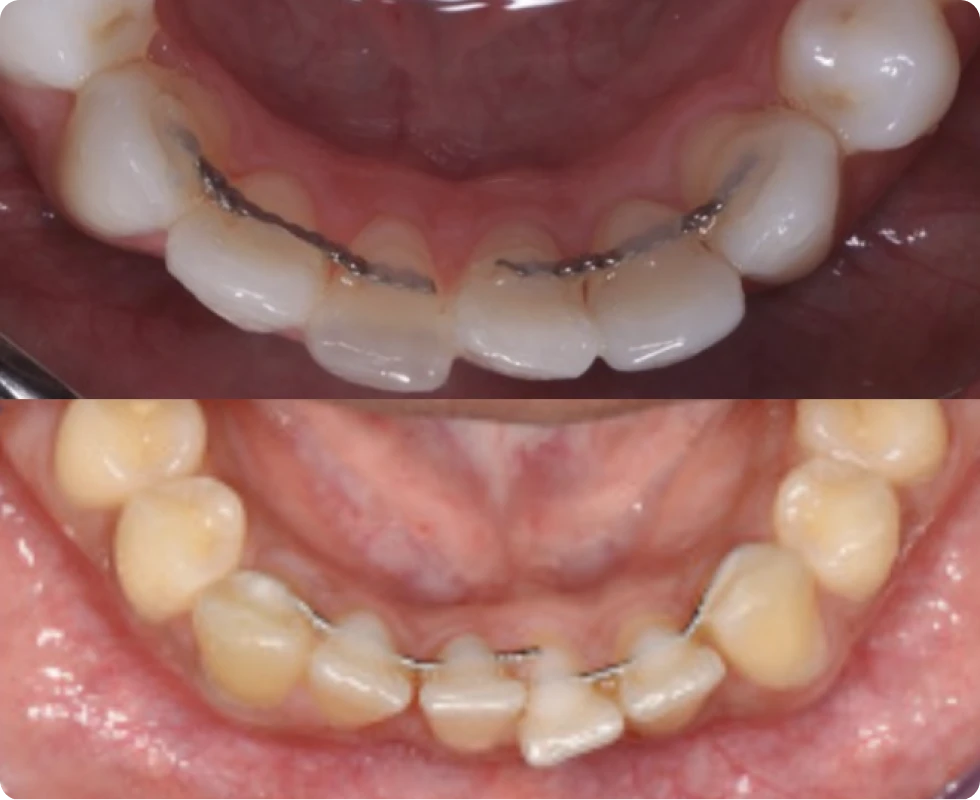
Debonded Retainer Wire: What to Do Immediately
Never attempt to re-bond the wire yourself; an unsuitable adhesive will not hold and can stain the enamel. Simply cover the poking part with a bit of orthodontic wax, opt for soft foods for two days, and wear your retainer to maintain alignment if you have one. Then call your orthodontist: in most cases, a fifteen-minute procedure within 48 hours is enough to restore post-treatment stability.
Why it’s not serious… but urgent
A debonded retainer wire does not damage bone or gum; it simply releases the elastic memory of the ligaments. It is therefore a functional, non-life-threatening orthodontic emergency that needs to be addressed quickly to preserve alignment. The first twenty-four hours pass without visible signs. After a week, a slight gap may reappear between two incisors. After a month, the drift sometimes becomes pronounced enough to require a new aligning appliance. The urgency is therefore functional: the longer you wait, the longer and more costly any eventual correction will be. A retainer wire is mandatory as part of your treatment completion; acting quickly preserves your smile without having to restart active treatment.
Why Does the Wire Debond?
Within the first 24 hours, everything depends on the moment your retainer wire is bonded. A single drop of saliva can compromise adhesion: the resin may not bond properly, and the wire can debond with the first crunchy food. When the adhesive does not bond perfectly, retention generally fails from the outset.
After a few weeks or months, isolated incidents often cause debonding: an overly sticky caramel, a chewed pen. The impact, sometimes minor, shears the thin layer of composite. In parallel, nocturnal bruxism exerts its invisible effects. Each jaw contraction is equivalent to pressing twenty kilograms of weight on your teeth. Repeated every night, this pressure weakens the adhesive, which eventually cracks from within.
After one year, the resin ages. It absorbs moisture, plasticizes, and weakens. The wire, especially if it’s braided, imperceptibly loosens. And there’s something rarely felt, but which plays a key role: occlusion. This is how your upper and lower teeth meet when you close your mouth. Over time, it can subtly evolve: the tongue pushes a bit harder, a wisdom tooth starts to shift, a small contact point changes unnoticed.
The result? New pressures, even minimal ones, are exerted on the wire every day. These repeated micro-stresses accumulate. One morning, without any impact, you feel the wire move — it’s simply time taking its toll.
Types of Retainer Wires and Resistance to Debonding and Breakage
| Material & Example | Main Advantages | Considerations | Debonding Propensity |
| Braided Steel | Flexible, economical, well-known | Plaque accumulation; More frequent breakage; Not always well-adapted; Less aesthetic | Moderate |
| Fiber Composite | Very discreet, gentle on the tongue | More rigid: transmits impact without cushioning | Quite High |
| PEEK Polymer (eZtain®) | Flexible, 3 × stronger, smooth surface, perfect adaptation to the gum, MRI-compatible. | Very Low |
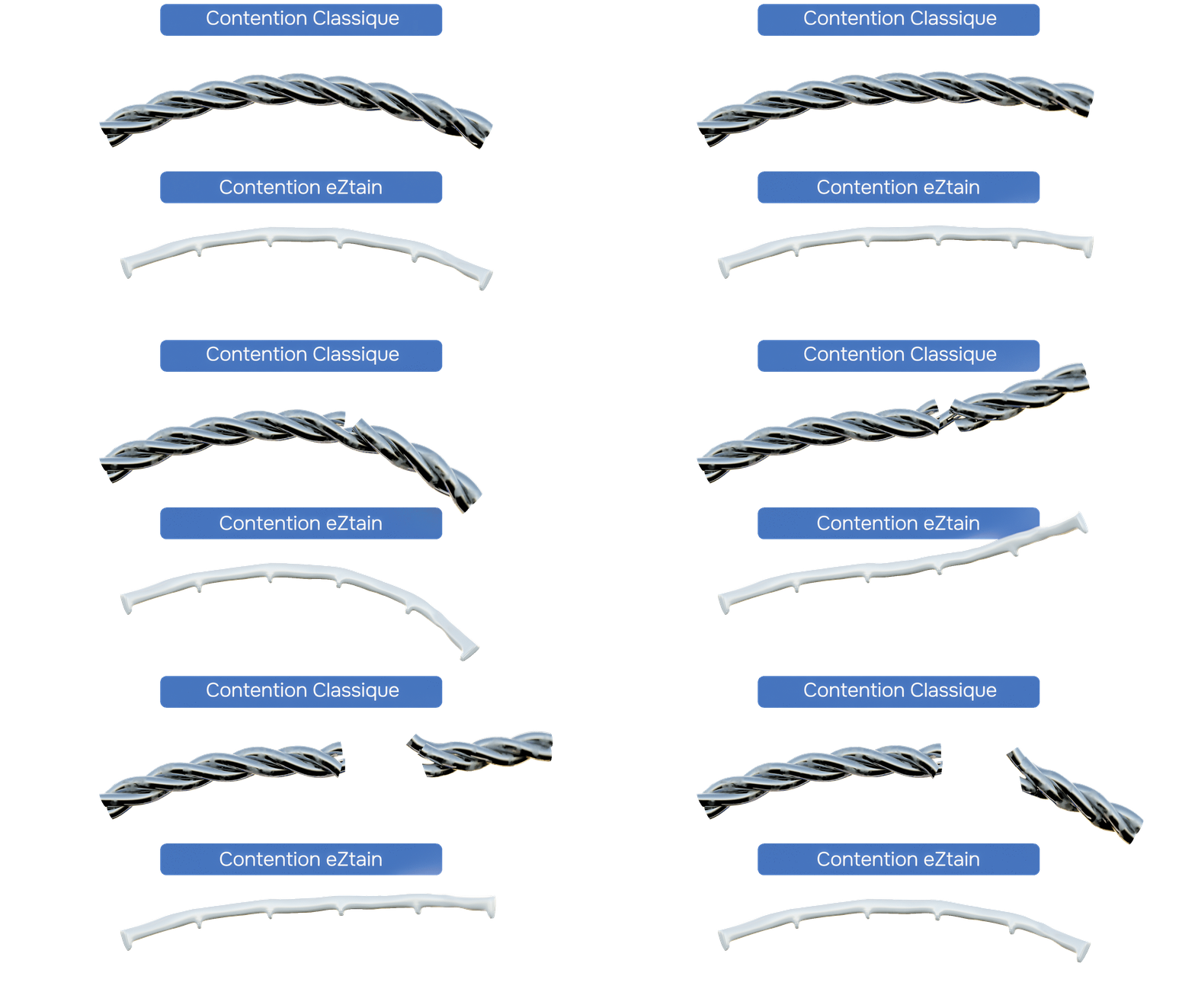
In short: The PEEK used by eZtain® flexes without breaking, limits the transmission of occlusal forces to the composite, and significantly reduces dental plaque adhesion. The Result? Fewer retainer wire emergencies, and significantly improved oral comfort compared to other types of retainers available on the market.
How is a Debonded Retainer Wire Repaired?
Upon arrival at the clinic, the orthodontist begins with a quick visual check: they verify that, despite the debonded retainer wire, your teeth have not shifted. Visually or with a small digital photo, they confirm that the alignment remains stable.
They then proceed to cleaning. The residual resin is gently polished, so that the tooth regains a perfectly smooth surface – no pain is expected during this phase.
Next is enamel preparation: a blue gel, applied for fifteen seconds, opens the micro-pores of the tooth. After rinsing and drying, the surface is ready to receive the new adhesive.
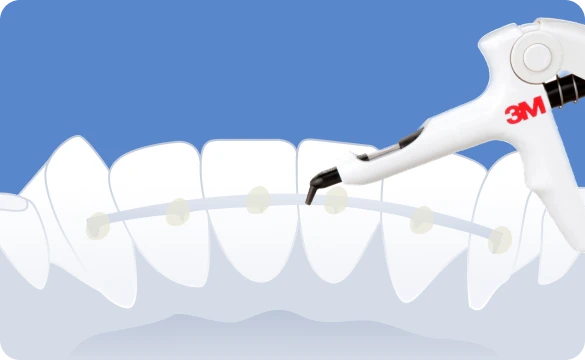
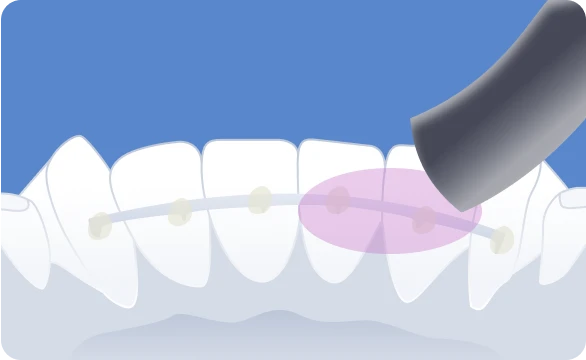
The practitioner then places a composite on the wire – steel, composite, or PEEK – which sets under an LED light. The wire is optionally repositioned beforehand if it had deformed. Before you leave, they perform a comfort check. In less than fifteen minutes, the repair is complete: your smile is secure once again.
The replacement of a retainer wire is generally not covered by health insurance outside of treatment periods; to learn more, consult our article dedicated to the cost of retainer wires in 2025.

Preventing a New Debonding with Three Key Habits
- Proper Hygiene
Carefully brush the base of your teeth and use an interdental brush or water flosser under the retainer, especially after meals. This is the best way to prevent plaque or tartar from weakening the adhesive in the long term. - Chew with Caution
Avoid extremely hard foods. Gentle chewing isn’t about deprivation, but avoid bad habits like onychophagia (nail-biting) or chewing on pens, etc. - Protect During the Night
If you clench or grind your teeth while sleeping, a custom-made thin nightguard cushions the pressures. It prevents these repeated micro-shocks from being transmitted to the wire and adhesive — a true invisible shield during your sleep.
How Do I Know if My Retainer Wire is Debonding?
A sensation of a loose wire under the tongue, a poking tip, or a tiny gap reopening between two incisors often signal debonding. A quick check prevents a relapse from setting in.
Even without pain, watch for subtle signs: new tartar buildup, a wire that produces a slight ‘click’ when you speak or press with your tongue, irritated gums. The ‘dental emergency’ reflex – a simple call – limits the risk of tooth movement and ensures long-term retention.
Who Can Replace a Retainer Wire?
Every orthodontist has the appropriate technical equipment; some general dentists trained in retention also perform the procedure, provided they master the protocol for long-term retention..
What’s important is a sterile environment: dry isolation, etching gel, hydrophobic adhesive. A well-equipped practitioner ensures durable bonding that resists masticatory forces and parafunctions like nocturnal bruxism, guaranteeing post-treatment stability.
How to Re-bond Your Retainer Wire?
You cannot re-bond a retainer wire at home; dental adhesives for prosthetics do not adhere to enamel. Only professional bonding, using a dental dam or salivary rolls, ensures longevity and correct positioning.
The practitioner checks the condition of the adhesive, performs micro-abrasion to prepare the enamel, and applies a high-adhesion light-cured resin. This protocol will optimally restore the anchorage.
Can a Dentist Re-bond a Retainer Wire?
Yes, if the practitioner is trained for the procedure and the clinic has the orthodontic equipment: micro-abrasion, etching gel, suitable composite.. When in doubt, many refer to an orthodontic specialist to ensure post-treatment stability.
Precise bonding requires a perfectly dry field; without adhering to this, the adhesive retains moisture and fails quickly.
What to Do if My Retainer Wire Breaks?
Gently remove the loose fragment to avoid swallowing it, protect the area with wax, and consult promptly; even if partially broken, the wire no longer distributes forces, and a tooth can shift within 48 hours.
A broken fragment often creates an irritation point and promotes plaque stagnation. The faster the repair, the less risk of gingival inflammation or orthodontic relapse. Early intervention also avoids more extensive post-orthodontic care.
Why Does My Retainer Wire Debond?
Most often: sudden food impact, repeated nocturnal bruxism, or resin aging after several years, improper bonding protocol. Regular maintenance and, if needed, a more resistant wire like eZtain® limit these risks.
Some adhesives wear down upon contact with oral acidity; bacterial plaque and then tartar infiltrate the adhesive. An innovative retainer wire made of PEEK polymer, resulting from biomedical innovation and a university partnership, better absorbs pressure and stays cleaner, reducing mechanical and chemical causes of debonding.
Learn More
Is an Invisible Wire Always Fragile?
Fiber-reinforced splints withstand impacts less effectively, but eZtain® PEEK combines discretion and flexibility; it absorbs stresses without breaking.
Can Teeth Shift in 48 Hours?
The movement remains microscopic, but movements start early; re-bonding quickly prevents relapse from becoming visible.
Can I Chew Gum with a Bonded Wire?
Occasional sugar-free chewing gum is not a problem, but prolonged chewing increases resin fatigue; it’s better to limit it.
Should a Wire Be Replaced Every Five Years?
Not necessarily; if the adhesive is intact and hygiene is impeccable, a wire can last much longer. An annual check-up is sufficient to decide.
About the Author
Dr. Nicolas Philippides is an orthodontist, a graduate of the University of Strasbourg, holding a CES in dentofacial orthopedics. With several years of clinical practice, he has guided hundreds of patients through their orthodontic treatment, with a constant commitment to long-term stability and comfort.
Faced with the limitations of conventional retainers, in 2022 he decided to found eZtain Lab: a project born from a simple yet recurring clinical observation — too many relapses due to ill-fitting or overly fragile wires. In collaboration with INSA, he developed a new generation of custom-made, comfortable, and durable PEEK retainer wires.
Today, his research and experience fuel a single ambition: to offer reliable devices, designed to last, and adapted to the demands of modern orthodontics.